
9mm Ammo Ballistics and Performance: A Complete Guide for Shooters
9mm ammo is a centerfire pistol cartridge defined by its 9x19mm case, which balances recoil and stopping power for reliable performance in semiautomatic handguns. It functions by igniting a propellant charge that drives a jacketed bullet—typically 115 to 147 grains—through a rifled barrel, creating .260 Remington Ammo for Sale consistent muzzle velocity and energy transfer. Its straight-walled case and rimless design ensure smooth feeding and extraction, making it a preferred choice for controlled target practice and defensive shooting. For optimal accuracy, select bullet weight and powder load to match your firearm’s twist rate and intended distance.
Why the 9mm Luger Dominates as a Go-To Cartridge Choice
The 9mm Luger’s reign as the go-to cartridge isn’t marketing hype—it’s pure physics and practicality. 9mm ammo offers a sweet spot of manageable recoil and proven stopping power, letting you get fast follow-up shots on target without the wrist punishment of larger calibers. Its compact case allows for higher magazine capacities in handguns, which matters when you need more rounds on tap. Plus, the sheer volume of 9mm ammo produced keeps prices consistently lower than .40 or .45, so you can actually afford to train regularly. That practice translates to real proficiency. From compact carry guns to full-size duty pistols, the 9mm’s versatility and ballistics make it the default answer for anyone who simply wants a reliable, effective defensive cartridge that’s easy to shoot well.
Balanced Recoil and Control for Faster Follow-Up Shots
The 9mm Luger’s recoil impulse is a direct function of its pressure curve and bullet weight, typically 115 to 147 grains, which produces a sharp but manageable rearward push rather than a violent muzzle flip. This predictability allows shooters to maintain a firm grip and consistent sight alignment, reducing the time needed to return the front sight to the target. Because the slide cycle rate is fast yet not punishing, the muzzle rises minimally, enabling quicker reacquisition for a second shot. Shooters can therefore execute controlled pairs or rapid strings without over-correcting, as the hand’s natural recovery aligns with the cartridge’s dwell time. This balance of recoil and control directly translates to tighter shot groups during speed drills, making the 9mm’s handling an edge for defensive and competitive use alike.
Magazine Capacity Advantages Over Larger Calibers
The primary advantage of 9mm ammunition in a defensive context is increased magazine capacity over larger calibers. A typical double-stack 9mm pistol holds 15–18 rounds, while a comparable .45 ACP platform often carries only 8–10. This differential directly translates into more opportunities to address multiple threats without a reload. When comparing recoil impulse, the lighter 9mm round allows for faster follow-up shots, meaning you can place more rounds on target in the same time frame. Furthermore, the narrower cartridge case permits a more ergonomic grip on the firearm, which improves control during sustained fire. The capacity advantage becomes a practical buffer in high-stress situations where accuracy degrades, making the sheer number of available rounds a critical safety margin.
Cost-Per-Round Efficiency That Supports Regular Practice
The 9mm Luger’s cost-per-round efficiency that supports regular practice stems from immense manufacturing volume and material economy, directly enabling higher live-fire repetition without budget strain. Because ballistic consistency remains uniform across budget-friendly loads, shooters can drill trigger control and recoil management using the same round they carry, without compensating for erratic performance. Comparing costs clarifies this advantage:
| Cartridge | Typical Cost per Round | Practice Rounds per $50 |
|---|---|---|
| 9mm Luger | $0.22–$0.28 | 180–227 |
| .40 S&W | $0.32–$0.40 | 125–156 |
| .45 ACP | $0.38–$0.50 | 100–131 |
This price gap translates to 30–40% more trigger pulls per dollar than larger calibers, allowing for thousands of repetitions monthly. Regular practice with identical ammunition builds muscle memory and feed-path familiarity, ensuring that defensive performance mirrors training. Lower per-round overhead also permits longer sessions, which improves sight alignment and transition speed. The financial sustainability of high-volume 9mm training promotes continuous skill retention, making it the practical choice for shooters who prioritize measurable proficiency over raw power.
Key Differences in 9mm Bullet Weights and Profiles
The key differences in 9mm bullet weights and profiles directly alter recoil impulse, penetration depth, and feeding reliability. Heavier bullets, such as 147-grain loads, are typically subsonic, producing less felt recoil but requiring longer barrel twist rates for stabilization; they excel in suppressed use. Lighter 115-grain rounds generate higher velocities and flatter trajectories, making them ideal for competition, yet they may under-penetrate barriers. Profile matters just as much: full metal jacket (FMJ) rounds use a rounded ogive for smooth feeding in all gun types, while hollow points with a wider, flatter meplat expand reliably but can catch on feed ramps in compact pistols. Flat-nose profiles, common in 124-grain loads, offer a compromise—more consistent expansion than FMJ without the feeding sensitivity of deep hollow points.
Choosing a 124-grain round with a slightly rounded flat-nose profile often provides the most balanced performance across diverse 9mm handguns.
115-Grain vs. 124-Grain: How Weight Shifts Point of Impact
Switching between 115-grain and 124-grain 9mm loads doesn’t just change recoil—it directly shifts your point of impact at typical pistol distances. Because 115-grain bullets usually travel faster, they drop less at 25 yards, landing slightly higher on the target compared to 124-grain rounds, which arc a bit more due to their heavier mass and slower 7.5×55 Swiss Ammo for Sale velocity. In a fixed-sight pistol, you’ll often see 124-grain impacts a half-inch to an inch lower at 15–25 yards. Your zeroing distance matters most, though, since a 10-yard zero minimizes this shift while a 25-yard zero amplifies it. Sights designed for one weight may require holdover adjustments if you’re shooting the other, especially for precision work or steel challenges.

147-Grain Subsonic Loads for Suppressed Shooting
147-grain subsonic loads for suppressed shooting prioritize a muzzle velocity below roughly 1,050 feet per second, ensuring no sonic crack forms in flight. Heavier than 115- or 124-grain rounds, this bullet maintains reliable gas-system function in a suppressed pistol, which often cycles sluggishly with lighter subsonics. The added mass delivers adequate kinetic energy for defensive or range use while reducing sharp recoil impulse, aiding rapid follow-up shots. Because the projectile stays subsonic, the shooter hears only the mechanical action and bullet impact, not a ballistic boom. This weight profile typically 6mm ARC Ammo for Sale performs better in longer barrels, reaching target with a flatter trajectory than slower, lighter alternatives. For can users, this load offers an optimal balance of suppression effectiveness and terminal performance.
- First-round pop is minimized by the heavy bullet’s slower, controlled powder burn.
- Point of impact often differs predictably from supersonic loads, requiring a dedicated zero.
- Standard 1:10 twist rates stabilize this weight without issue in most modern pistols.
- Suppressed hosts with lighter recoil springs benefit from the 147-grain’s steady push.
Flat-Nose vs. Round-Nose vs. Hollow-Point: Terminal Effects Explained
The 9mm bullet’s profile dictates its terminal behavior on target. A round-nose design typically pierces cleanly, offering deep penetration but often creating a narrow wound channel that lacks immediate stopping power, as it can deflect off bone. Conversely, a flat-nose 9mm crushes tissue upon impact, producing a larger permanent cavity and more dramatic hydrostatic shock, making it a reliable choice for defensive loads where barrier penetration is needed. However, the hollow-point is engineered for expansion, mushrooming upon entering soft tissue to maximize energy transfer rapidly while reducing over-penetration risk. This makes it superior for self-defense, whereas the other profiles favor target practice or feeding reliability in older pistols.
Choosing the Right 9mm Load for Self-Defense vs. Target Use
When I first started shooting, I grabbed whatever 9mm ammo was cheapest, and it worked fine for punching paper. But the moment I considered carrying that same box for protection, I realized .243 Ammo for Sale the choice isn’t about price—it’s about purpose. For **choosing the right 9mm load for self-defense vs. target use**, you need to look at bullet design. Target loads, like full metal jacket (FMJ), are reliable, feed smoothly, and keep recoil manageable for long practice sessions, but they punch straight through a threat. For self-defense, you want a jacketed hollow point that expands on impact, dumping energy into the target and reducing over-penetration risks. I keep a box of 115-grain FMJ for range drills to build muscle memory, but my carry magazine stays loaded with 124-grain +P hollow points, which cycle in my pistol and give me confidence when it matters. The real lesson: train with what you carry, but understand that your defensive load is a tool for a life-or-death moment, not a range companion.
Expansion and Penetration Criteria for Defensive Rounds
For defensive 9mm loads, terminal performance hinges on balancing **gel-tested expansion and penetration**. A round must expand reliably to create a larger wound channel, yet still drive deep enough to reach vital organs through layered clothing or barriers. The FBI’s standard of 12–18 inches of ballistic gel penetration remains the benchmark; anything less risks under-penetration, while deeper wounds may over-penetrate and endanger bystanders. Expansion should be measured across various testing conditions—through heavy denim, drywall, and auto glass—since hollow points clog with fabric and fail 9x23mm Winchester Ammo for Sale to bloom. When evaluating options, follow this sequence:
- Confirm expansion diameter in calibrated gel (ideally 0.60–0.75 inches).
- Verify penetration depth stays within 14–16 inches with consistent expansion.
- Test at least three barrier types to ensure terminal uniformity.
- Prioritize loads with bonded or jacketed cores to retain weight.
Ultimately, predictable expansion and penetration beat raw velocity or energy figures when selecting a defensive round for everyday carry.
Full Metal Jacket Options for Range Drills and Training
For range drills and training, full metal jacket (FMJ) 9mm loads prioritize reliable feeding and consistent recoil over terminal expansion. Choose 115-grain options for rapid-fire drills, as they produce snappier impulse, while 124-grain FMJ better mimics the recoil profile of common defensive hollow points. Flat-nose FMJ variants offer cleaner holes in paper targets but can cause feeding issues in some pistols; test a box first. For sustained training, seek loads with sealed primers and nickel-plated cases to resist corrosion during extended storage. A comparative table clarifies typical choices:
| FMJ Load | Best For | Recoil Feel |
|---|---|---|
| 115-grain round nose | Speed drills, competition practice | Lighter, quicker |
| 124-grain round nose | Defensive replication | Moderate, .223 Ammo for Sale closer to HP |
| 147-grain flat nose | Suppressed shooting, precision | Softer, .22-250 Ammo for Sale push-like |
Always verify your firearm’s feed ramp geometry with flat-nose shapes, and rotate training stock to avoid firing degraded ammunition.
When to Choose +P and +P+ Pressure Loads
Choose +P and +P+ loads when you need every bit of terminal performance from your 9mm self-defense rounds, especially through barriers like heavy clothing or auto glass. They shine in compact pistols where shorter barrels rob velocity, helping expansion and penetration stay reliable. Stick with +P for carry ammo in modern, well-built firearms—it’s a proven sweet spot. Reserve +P+ for situations where you absolutely must defeat cover or when shooting through unusually tough obstacles, but only if your manual explicitly approves it. *The recoil and muzzle flip increase noticeably, so train extensively before betting your life on it.* For target use, skip both—they’ll beat up your gun and wallet for zero accuracy gain.
Reading the Box: Key Specs on 9mm Packaging You Should Understand
The cardboard box in your hand tells a story before you even rack the slide. On 9mm ammo, the first line—usually “9x19mm” or “9mm Luger”—is your compatibility anchor, while “124 gr” (grain) reveals the projectile’s weight, shaping recoil and penetration. The “FMJ” or “JHP” marking is your terminal plot twist: full metal jacket for range drills, hollow points for defensive stops. Velocities printed in feet per second (like “1,150 fps”) hint at how flat your trajectory will be, and “+P” warns of extra pressure best reserved for bulk ammo for sale sturdy barrels. Yet the real nuance lies in lot numbers—a tiny stamp that can mean the difference between consistent holds and fliers downrange. Finally, check the primer type on the label; if it says “small pistol,” your striker will thank you. Read the box like a map, not a menu. The specs are your first zero.
Muzzle Velocity and Energy Figures Demystified
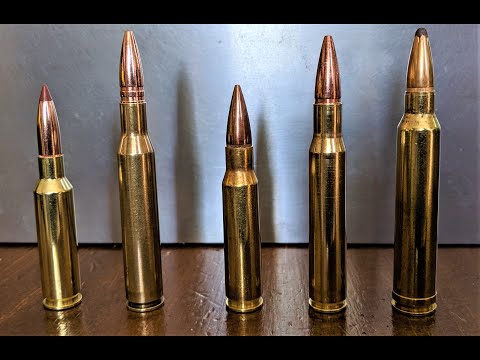
Muzzle velocity, listed in feet per second (fps), measures the bullet’s speed at the barrel’s exit, while muzzle energy—expressed in foot-pounds (ft-lbs)—reflects the kinetic force it carries on impact. These two figures are interdependent but not interchangeable: a light 115-grain bullet may leave the barrel at 1,200 fps yet produce less energy than a heavier 147-grain load moving slower at 950 fps. For defensive use, look for adequate muzzle energy for reliable penetration, typically above 300 ft-lbs, rather than chasing high velocity alone. Remember that barrel length alters these numbers—shorter pistols reduce both raw velocity and realized energy. Q: How do I interpret muzzle energy figures? A: Energy, calculated as mass times velocity squared divided by a constant, tells you the bullet’s work potential; higher energy often means deeper penetration, but test your specific firearm for consistency.
Primer Types: Boxer vs. Berdan and Reloading Implications
When you flip a 9mm box over, the primer type tells you a lot about reloading potential. Most modern 9mm uses Boxer primers, which have a single, central flash hole—making spent cases easy to deprime and reload. Berdan primers, common in surplus or imported ammo, use two offset flash holes and require a special tool, plus the anvil is built into the case, so you can’t just punch the primer out. For the casual reloader, stick with Boxer. If you accidentally collect Berdan brass, here’s the quick check: look for one hole vs. two. Berdan cases are usually not worth the hassle for 9mm. So, before you buy a bulk pack for reloading, confirm the primer type on the box—otherwise, you’ll waste time sorting scrap.
- Check the primer pocket for one central flash hole (Boxer) or two offset holes (Berdan).
- Only reload Boxer cases with standard reloading dies and a conventional decapping pin.
- If you find Berdan, either discard it or keep it separate—reloading it 7.62 Tokarev Ammo for Sale requires a special eccentric punch and patience.

Jacket Materials and Their Effect on Barrel Fouling
The jacket’s metal composition directly dictates fouling buildup inside your 9mm barrel. Traditional copper-jacketed rounds leave copper shavings that accumulate in the rifling, typically requiring solvent-based cleanup after several hundred rounds. In contrast, lead-free primer-compatible options like copper-clad steel or nickel-plated jackets shed less material, reducing carbon and metal residue. A gilding metal jacket—a 90/10 copper-zinc blend—is softer, increasing bore friction and fouling, while a thicker, harder tombac or steel jacket minimizes stripping but can accelerate abrasive wear. For suppressors or extensive range sessions, consider polygonal-rifling-friendly jacketed hollow points, which mitigate fouling adhesion. Always match jacket hardness to your barrel’s twist rate to limit residue and preserve accuracy.
| Jacket Material | Fouling Profile | Cleaning Frequency |
|---|---|---|
| Pure copper (plated) | Heavy, sticky copper streaks | Every 200–300 rounds |
| Gilding metal (Cu/Zn) | Moderate, soft deposits | Every 400–500 rounds |
| Nickel-plated or steel | Minimal, brittle ash-like residue | Every 600–800 rounds |
Practical Tips for Storing and Handling These Cartridges
To preserve **9mm ammo reliability**, always store cartridges in a sealed, airtight container with desiccant packs, as moisture is the primary enemy of primers and powder. Keep the ammunition in a cool, dark, stable environment below 75°F, avoiding attic heat or garage humidity swings. When handling, never force a round into a tight magazine; if a 9mm cartridge does not seat freely, discard it to prevent feed jams. Rotate your stored stock every six months, shooting the older lot first to maintain consistent pressure. For **practical ammo storage**, use original factory boxes or reloading trays—never loose in a pocket where rim damage and primer strikes occur. Gloves and dry hands are essential, as skin oils accelerate case corrosion over time.
Proper Ammo Storage Conditions to Preserve Function and Consistency

To preserve 9mm function and consistency, store ammunition in a cool, dry, and stable environment—ideally between 55–75°F with relative humidity 6mm Creedmoor Ammo for Sale below 30%. Temperature swings cause condensation inside the case and primer, degrading powder burn rates and altering ballistic uniformity. Keep boxes off concrete floors, which wick moisture upward; use sealed plastic ammo cans or zip-top bags with a desiccant pack inside. Rotating stock by lot ensures older rounds don’t become unknown variables in your performance baseline. The sequence for proper handling:
- Inspect each box for rust or green verdigris on brass before storage.
- Place in airtight containers with desiccant, then seal lids fully.
- Store in a closet or interior room away from exterior walls, avoiding garages and attics.
- Check every six months for humidity indicators, replacing desiccant when saturated.
Consistency requires shielding rounds from UV light and solvents, as both break down propellant and sealants, leading to misfeeds or velocity dips.
Identifying Signs of Aged or Damaged Rounds Before Loading
Before loading any 9mm round, inspect the case mouth for cracks, splits, or corrosion that appears as green or white crusty deposits. Check the primer pocket for signs of backing out, which indicates excessive pressure or prior reloading, and verify the primer itself is seated flush, not protruding. Examine the bullet for deep scratches, dents, or an uneven crimp line, as these compromise seating depth and can cause chambering failures. Tarnished or darkened brass is cosmetic, but any green oxidation near the case wall signals structural weakness. Always discard rounds that fail a gentle roll test on a flat surface, as wobbling reveals bullet setback or case bulge. Pre-load visual inspection prevents malfunctions by catching these defects before they enter the chamber.
Rounds with cracked cases, corroded primers, or bullet setback must be rejected immediately—never load anything that fails a simple visual and roll test.
Matching Your Pistol’s Twist Rate to Bullet Weight for Best Accuracy
For 9mm pistols, most barrels use a 1:10 twist, which stabilizes standard 115 to 147 grain loads reliably. However, if you shoot heavy subsonic 158-grain rounds, a faster 1:7 twist can prevent keyholing, while light 90-grain frangibles may perform better in a slower 1:16 twist to avoid over-stabilization and erratic yaw. To achieve optimal bullet weight stabilization, test your pistol’s accuracy at 25 yards with at least three bullet weights. If groups tighten with a heavier slug, your barrel likely prefers that rate. Conversely, a shorter barrel with a 1:16 twist will struggle with 147-grain flat-nose rounds. Always consult your manufacturer’s spec or use a bore scope to confirm the twist before buying bulk ammo, as mismatches cause vertical stringing and poor terminal performance.